TOEI: From the Bullet Train to the Video Boom
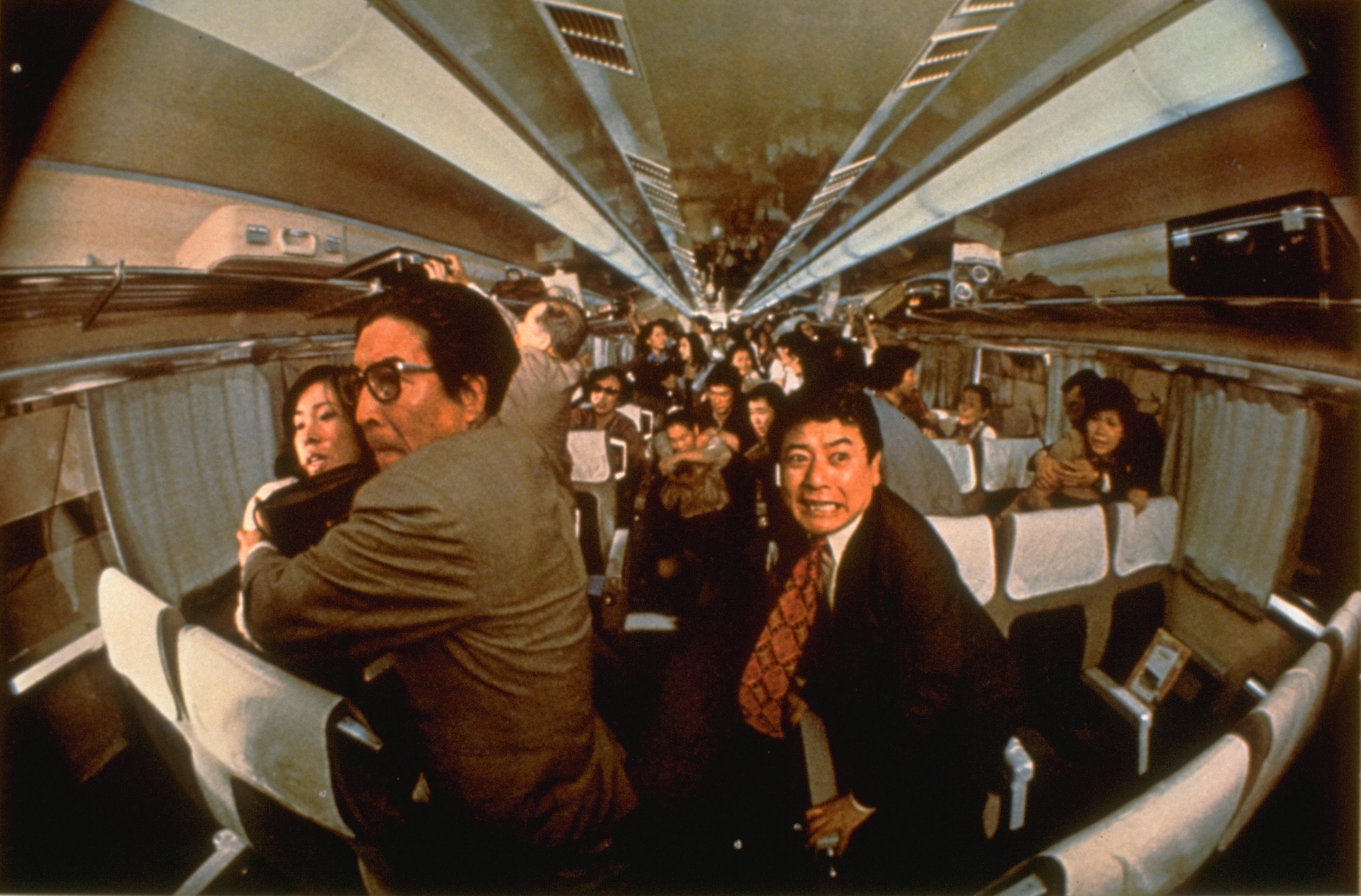

In 1975, Japanese film studio Toei released The Bullet Train, an ambitious disaster thriller in which a bomb threatens to destroy a Shinkansen carrying 1,500 passengers. Fourteen years later, the same company launched its V-Cinema label with Crime Hunter: Bullets of Rage, a short action film produced specifically for the home-video market. Although the two films belong to different periods of Japanese filmmaking, they offer an interesting perspective on how one of the country's major studios responded to changing audiences, technologies and ideas about popular cinema.
The Bullet Train: Disaster Cinema and a Changing Japan
The Bullet Train, directed by Junya Satō and starring Ken Takakura, Sonny Chiba and Tetsurō Tanba, emerged during a period when Japanese studios were exploring large-scale disaster films. Its premise is simple: a bomb has been planted aboard a high-speed train, and it will explode if the train slows below 80 kilometres per hour. What develops is an elaborate thriller moving between passengers, railway employees, police authorities and the criminals responsible, gradually revealing the circumstances that brought the perpetrators to such a desperate act.
The film belongs to the disaster cinema tradition of the 1970s, but Satō approaches the material with an interest in social conditions as well as spectacle. Japan's Shinkansen, introduced in 1964, represented the country's post-war economic transformation and technological confidence. By making this symbol of national progress the target of men marked by financial failure and disillusionment, the film creates a tension between Japan's collective achievements and those left behind. The criminals are responsible for extraordinary violence, yet the film takes their motivations seriously rather than presenting them as anonymous villains.
This attention to character distinguishes The Bullet Train from a conventional race-against-time thriller. The authorities struggle with both the technical challenge of keeping the train moving and the human consequences of their decisions, while the perpetrators become increasingly trapped by their own actions. The film's extended running time allows these perspectives to develop alongside the action, making the approaching disaster a source of physical suspense and moral uncertainty.
Its central idea would later become familiar to international audiences through Jan de Bont's Speed (1994), which transferred a similar premise to a Los Angeles city bus. Yet The Bullet Train has a different rhythm and emphasis, reflecting Japanese studio filmmaking and the social concerns of its time. In 2025, director Shinji Higuchi revisited the premise in Netflix's Bullet Train Explosion, while a new 4K restoration of the original was presented at the Cannes Film Festival in 2026.
Crime Hunter: The Rise of V-Cinema
By the time Toei released Crime Hunter: Bullets of Rage in 1989, Japanese film production had changed considerably. Home video and rental stores had created a market for films that no longer required theatrical releases to reach audiences. Rather than using video simply as a secondary distribution channel, Toei began developing original productions for home viewing, introducing V-Cinema as a new production and distribution model.
Directed by Toshimichi Ōkawa, Crime Hunter follows a detective seeking revenge after his partner is murdered, drawing him into a violent confrontation involving criminals, gunfights and an unlikely ally in the form of a nun armed with a shotgun. Its short running time and frequent action sequences reflect an approach shaped by video audiences. Where The Bullet Train builds suspense through an intricate narrative, Crime Hunter concentrates its energy into successive confrontations, borrowing from American action cinema while adapting its style to a smaller Japanese production.
V-Cinema changed more than distribution. Smaller budgets and shorter production schedules reduced some of the financial risks associated with theatrical releases while creating work for directors, actors and technical crews. During the 1990s, direct-to-video production became an important part of Japan's genre-film industry, particularly in crime, action, horror and exploitation cinema.
These productions varied widely in quality and ambition, and V-Cinema was often dismissed as inexpensive entertainment. Yet the format also allowed filmmakers to explore subjects and styles that were difficult to accommodate within more expensive theatrical productions. Takashi Miike developed much of his early career in this environment, while Kiyoshi Kurosawa worked in lower-budget genre filmmaking before gaining wider international recognition.
Crime Hunter marked the beginning of Toei's V-Cinema line, helping establish a model that other companies would adopt. Its significance lies not only in its action but also in the circumstances of its production and release, when the relationship between cinema and home entertainment was changing. Its inclusion in the International Film Festival Rotterdam's 2026 retrospective of Japanese V-Cinema reflects renewed interest in films long overlooked in conventional accounts of film history.
Seen together, The Bullet Train and Crime Hunter: Bullets of Rage illustrate two approaches to popular filmmaking. The former reflects an era when major studios invested in elaborate theatrical productions built around spectacle and established stars. The latter belongs to a period when home entertainment encouraged studios to reconsider how films could be financed, produced and distributed. Both were commercial responses to the markets of their time, but their contrasting forms reveal how profoundly those markets had changed.
Bringing these films together in a cinema today offers an interesting reversal. The Bullet Train returns to the environment for which it was designed, with its widescreen compositions and extended action sequences benefiting from theatrical presentation. Crime Hunter, meanwhile, receives a kind of exhibition that was never central to its original purpose. Removed from the video rental shelves for which it was produced, the film can be appreciated as part of a broader history of Japanese action filmmaking.
On 3 November, Lund Fantastic Film Festival presents both films as a Toei double bill, offering audiences an opportunity to explore two different chapters in the history of Japanese genre cinema.
TOEI Double Bill – Tuesday 3 November
THE BULLET TRAIN (1975)
Directed by Junya Satō
19:40 · Kino 1
CRIME HUNTER: BULLETS OF RAGE (1989)
Directed by Toshimichi Ōkawa
22:30 · Kino 1