MOM, I'M HAVING ISSUES

Family relationships have always been fertile ground for fantastic cinema. Parents shape us, protect us, disappoint us and, in the worst cases, provide enough emotional damage to sustain an entire horror film.
This year’s programme contains several films in which the family is not simply part of the background but the source of the central conflict. In Carrie, maternal control turns adolescence into a prison. Mum I’m Alien Pregnant takes the already complicated subject of pregnancy and adds an extraterrestrial dimension. The Restoration at Grayson Manor turns a dysfunctional mother–son relationship into camp Gothic horror, while Òpi explores family trauma through memory, identity and Kashubian folklore.
None of these films make a particularly convincing case for the family home as a place of peace and stability.
CARRIE
Dir. Brian De Palma — USA
Fifty years after its release, Brian De Palma’s Carrie remains one of horror cinema’s most recognisable portraits of a mother–daughter relationship gone catastrophically wrong.
Carrie White is already isolated and bullied at school when she returns home to Margaret, a mother whose religious fanaticism turns ordinary adolescence into something shameful and dangerous. Puberty, sexuality and independence are treated as evidence of sin, while affection is repeatedly replaced by control and punishment.
Carrie’s telekinetic powers make the story supernatural, but the emotional core is painfully ordinary. She is a teenager trying to understand herself in an environment where the people around her continually tell her that something is wrong with her. By the time the famous prom sequence arrives, the catastrophe has been building for a long time.
MUM I’M ALIEN PREGNANT
Dir. THUNDERLIPS — New Zealand
Pregnancy is already a subject loaded with expectations, anxiety and unsolicited opinions, and Mum I’m Alien Pregnant makes the situation considerably less manageable by introducing an extraterrestrial element.
The film uses its absurd premise to explore bodily autonomy, identity and family pressure, balancing body horror with comedy without reducing the situation to a simple joke. The title says almost everything about the particular social nightmare involved: some conversations with your mother are difficult enough before you have to explain that the pregnancy may not be entirely human.
Beneath the comedy is a more recognisable anxiety about losing control over your own body while the people around you become increasingly certain about what should happen to it.
Explore Mum I’m Alien Pregnant →
THE RESTORATION AT GRAYSON MANOR
Dir. Glenn McQuaid — Ireland / Austria
Boyd Grayson’s relationship with his mother Jacqueline is already strained before he loses his hands, and the introduction of experimental prosthetics does very little to improve matters.
The new hands are controlled by Boyd’s subconscious, which gives years of repression, resentment and unhealthy dependence a rather direct way of expressing themselves. Glenn McQuaid turns the Grayson household into a mixture of Gothic melodrama, black comedy and body horror, where family tensions become increasingly physical and increasingly difficult to contain.
The film is very aware of the absurdity of its premise, but the mother–son relationship underneath it gives the chaos its shape. The problem is not simply that the hands are acting independently. It is that Boyd and Jacqueline have been locked into an unhealthy dynamic long before the technology arrives.
Explore The Restoration at Grayson Manor →
ÒPI
Dir. Marta Giec — Poland
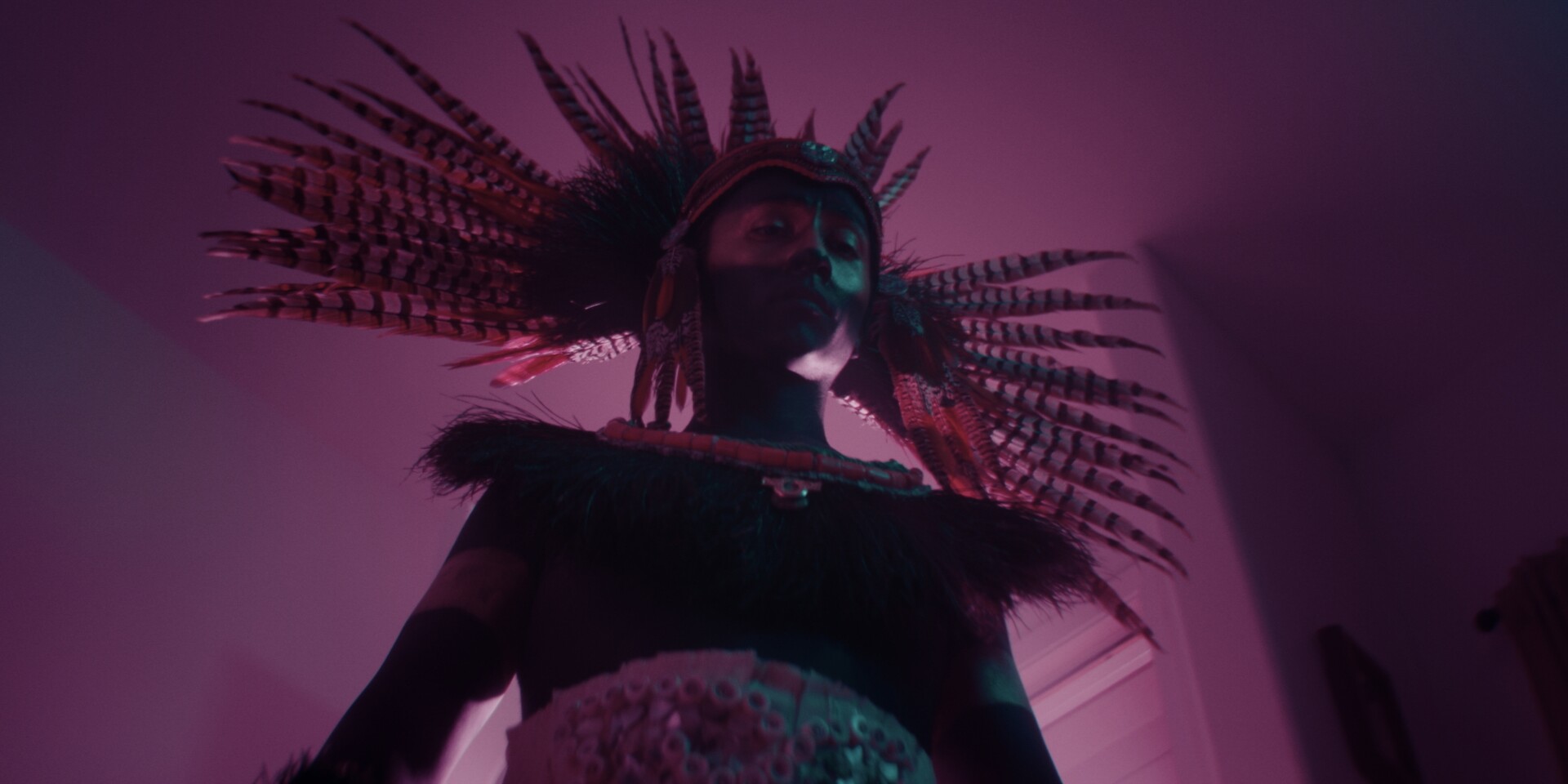
In Òpi, family trauma operates less explosively but is no less central. Rooted in Kashubian folklore, the film moves between fantasy and psychological drama as memory, identity and inherited experience begin to overlap.
Folklore is not simply used as atmosphere. It becomes a way of understanding how family histories continue to shape the present, and how certain patterns can be passed from one generation to another even when nobody fully understands where they began.
Compared with the other films here, Òpi is quieter and more elusive, but it shares the same underlying concern: what happens when family history becomes something you carry with you, whether you want to or not.
Across these four films, family becomes a source of control, anxiety, inheritance and transformation. The circumstances vary wildly, from religious repression and alien pregnancy to experimental prosthetics and Kashubian folklore, but the underlying problems are much less exotic. Fantastic cinema simply gives them more dramatic forms.