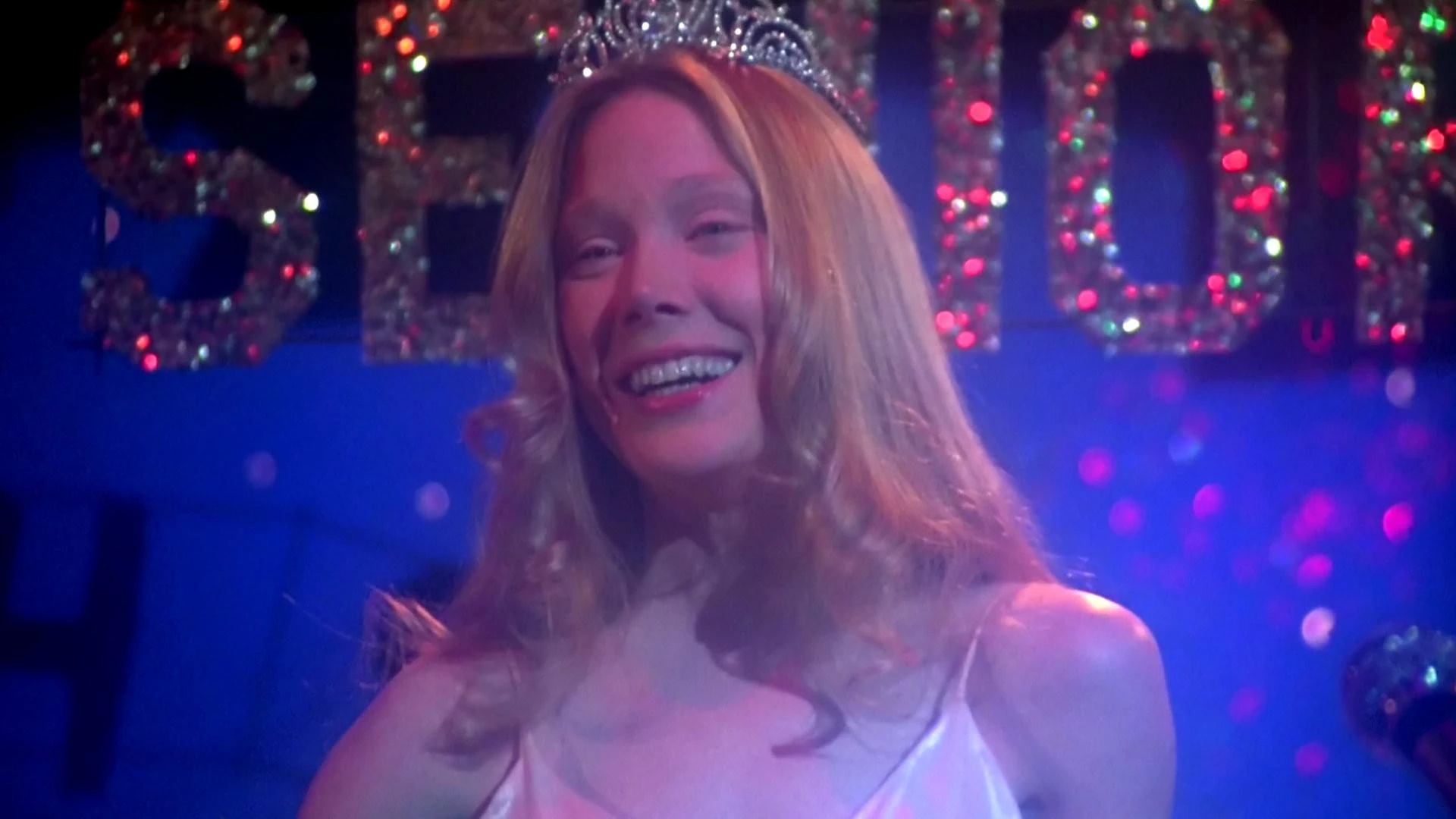
CARRIE: 50 Years of Prom Night Trauma
Join us this Halloween as we celebrate the 50th anniversary of Brian De Palma’s Carrie, one of the defining horror films of the 1970s and the first feature adaptation of a Stephen King novel.
Carrie White is a shy and isolated teenager, tormented by her classmates and controlled by her fanatically religious mother. When she is invited to the school prom, it finally seems that she may have a chance to escape her lonely existence. But a calculated act of cruelty pushes Carrie beyond breaking point and unleashes the terrifying power she has struggled to understand.
Released in 1976, Carrie transformed a story of adolescent shame, repression and bullying into one of cinema’s most enduring nightmares. Its climactic prom sequence has become a defining image of horror culture, endlessly referenced, imitated and reimagined across film and television. The film was also a major critical and commercial success, earning Academy Award nominations for both Sissy Spacek and Piper Laurie — a rare achievement for a horror film.
Fifty years later, De Palma’s feverish direction, Pino Donaggio’s haunting score and Spacek’s extraordinary performance remain as powerful as ever. Carrie is not only a supernatural revenge story, but a tragic portrait of a young woman destroyed by the people and institutions that should have protected her. Come celebrate five decades of prom night trauma with one of Stephen King’s most iconic characters.
Brian De Palma is an American filmmaker known for his elaborate visual style, psychological suspense and fascination with voyeurism, doubles, obsession and the unstable relationship between images and truth. Emerging from the New Hollywood generation, he developed a distinctive cinematic language built around split screens, long tracking shots, subjective camera work and carefully constructed set pieces.
His breakthrough came with films such as Sisters and Phantom of the Paradise, followed by Carrie, which became both a major commercial success and the first feature-film adaptation of a Stephen King novel. De Palma later directed influential thrillers and crime films including Dressed to Kill, Blow Out, Scarface, The Untouchables, Carlito’s Way and Mission: Impossible.
Frequently associated with Alfred Hitchcock, De Palma openly draws upon classical suspense cinema while transforming its techniques through heightened violence, eroticism, black humour and self-conscious experimentation. His films often make the audience aware of the act of looking itself: who controls an image, what remains outside the frame and whether what we see can ever be trusted.
Across a career spanning more than five decades, De Palma has remained one of American cinema’s most recognisable and provocative visual stylists. In Carrie, his formal precision and emotional excess combine to turn a story of adolescent isolation into one of horror cinema’s defining tragedies.