Carrie Turns 50: Five Decades of Prom Night Trauma
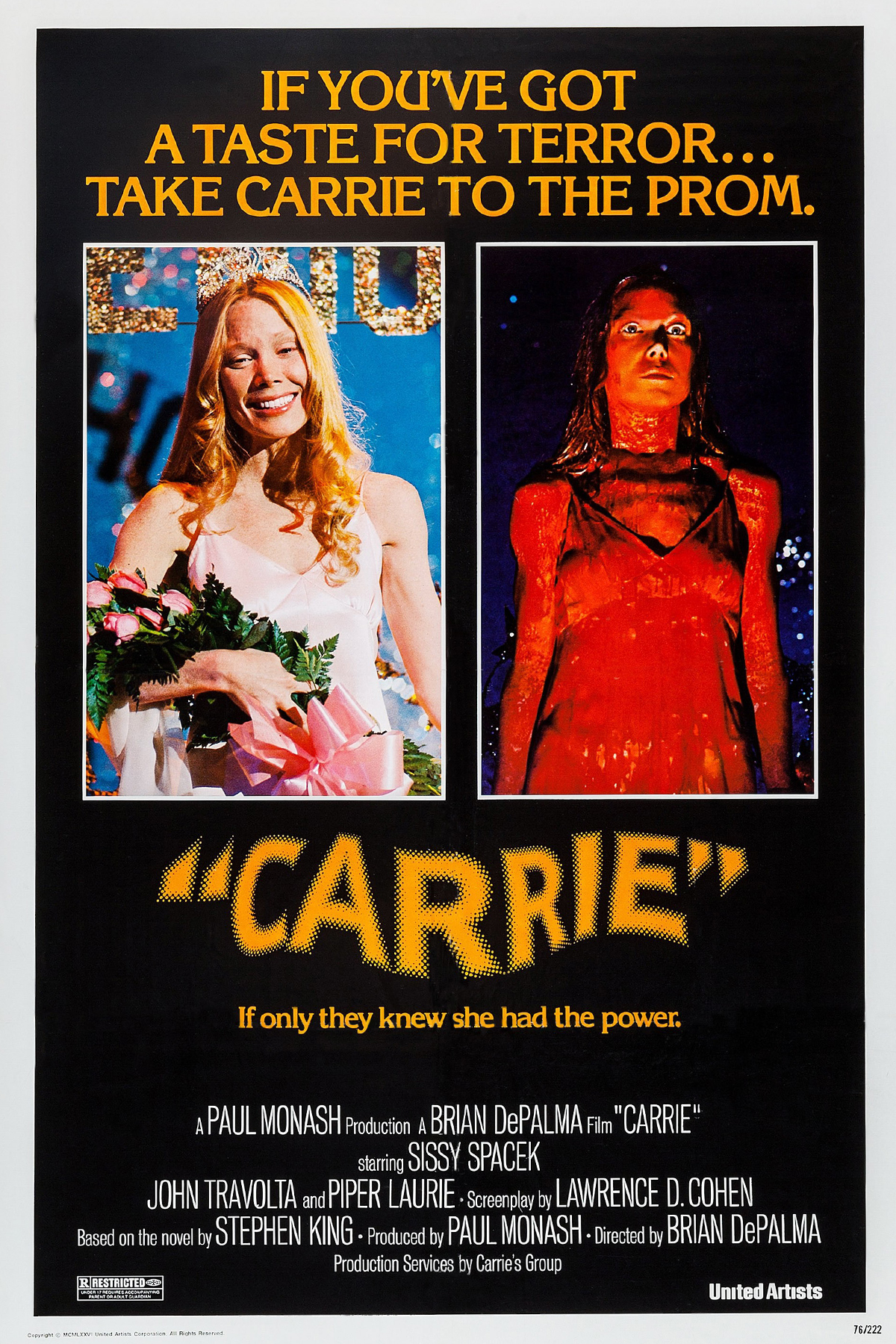
When Brian De Palma’s Carrie arrived in cinemas in 1976, it introduced audiences to one of horror’s most enduring figures: Carrie White, the isolated teenager whose humiliation, repression and rage erupt with devastating force. It was the first feature-film adaptation of a Stephen King novel, beginning a relationship between King’s fiction and the screen that would shape popular horror for decades.
Carrie is an outsider long before anything supernatural occurs. At school, she is mocked and bullied by her classmates. At home, she is controlled by Margaret, her fanatically religious mother, who treats the realities of Carrie’s body as evidence of sin. Between these two worlds, Carrie is denied knowledge, tenderness and any meaningful sense of safety.
Her telekinetic abilities gradually emerge as the physical expression of everything she has been forced to suppress. De Palma does not present her power as a simple gift or a convenient instrument of revenge. It is frightening precisely because it develops alongside Carrie’s isolation. The more the people around her deny her humanity, the more dangerous her buried anger becomes.
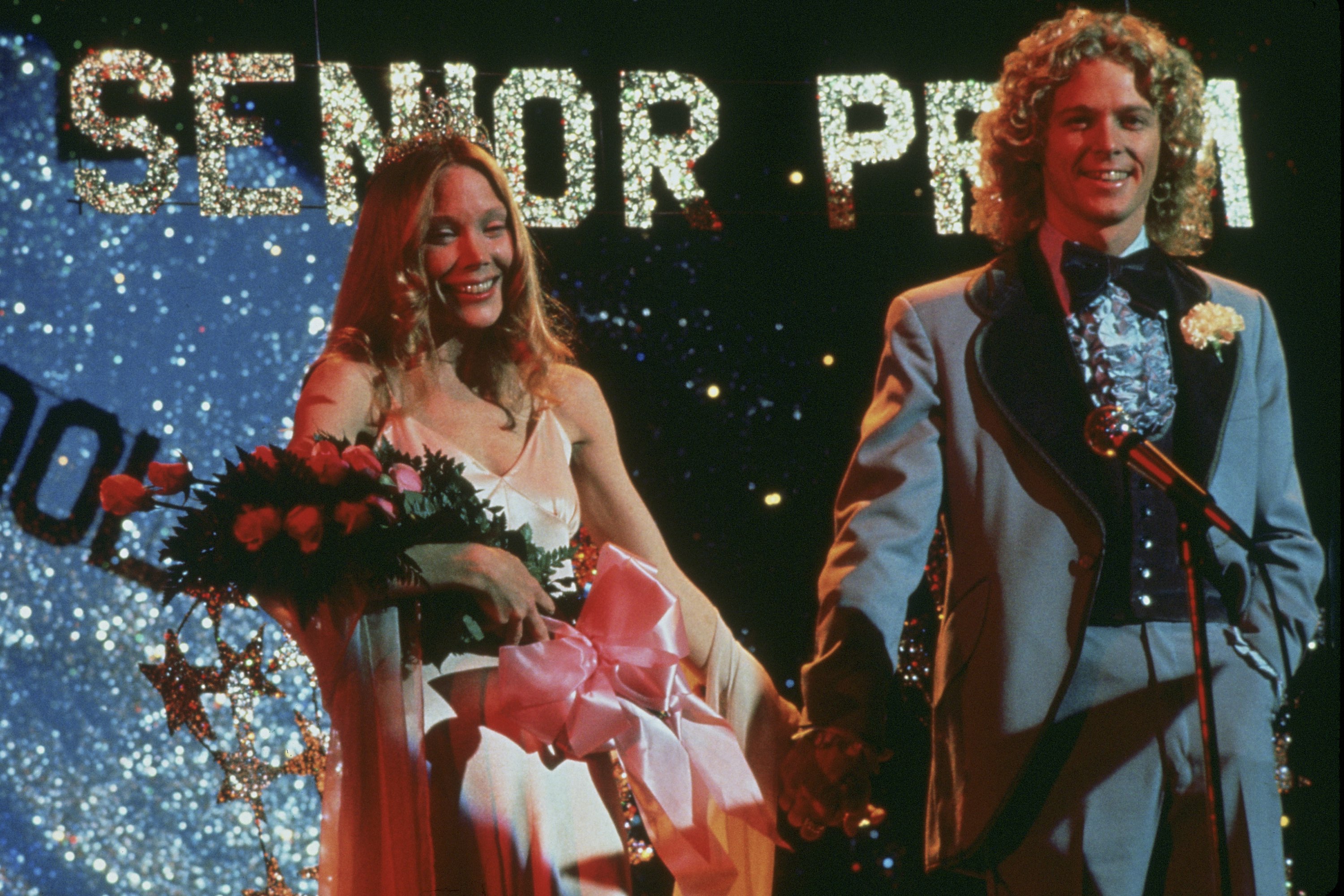
For a brief moment, the school prom offers the possibility of another life. Carrie is invited by Tommy Ross and enters the gym transformed, no longer appearing only as the frightened girl her classmates expect to see. De Palma stretches this fragile happiness until it becomes almost unbearable. We know that cruelty is waiting just outside the frame.
What follows has become one of the defining sequences in horror cinema. The lights, the music, the crown and the blood transform a familiar teenage ritual into a feverish nightmare. De Palma shifts between slow motion, split screens and Carrie’s horrified perception, turning the prom into both a public spectacle and a private psychological collapse. The sequence has been referenced, parodied and reimagined repeatedly, but its power has never depended solely on shock. It works because the violence has been building from the film’s first moments.
The horror of Carrie is not that a teenage girl possesses supernatural abilities. It is that almost every person and institution around her fails her. Her classmates treat vulnerability as entertainment. Her mother responds to fear with punishment. The adults at school notice fragments of the abuse but cannot prevent the catastrophe. By the time Carrie finally strikes back, revenge and tragedy have become impossible to separate.
Sissy Spacek’s performance gives the film its emotional centre. She makes Carrie awkward, frightened and painfully alert to every gesture around her, while allowing flashes of hope to appear without sentimentality. Piper Laurie’s Margaret is equally unforgettable: theatrical, terrifying and convinced that cruelty is a form of salvation. Both performances received Academy Award nominations, an unusual recognition for a horror film and evidence of the seriousness with which Carrie was received.
The film was also a substantial commercial success, earning more than $33 million from a budget of approximately $1.8 million. Its reception helped establish both Stephen King as a major source for screen adaptation and De Palma as one of the most distinctive stylists in American cinema.
Half a century later, Carrie remains more than a supernatural revenge story. It is a film about adolescence as exposure: the terror of being watched, judged and misunderstood at the moment when identity is still taking shape. Its images endure because the emotions beneath them remain recognisable. Shame becomes spectacle. Desire becomes danger. A school dance becomes an apocalypse.
Join us this Halloween as Lund Fantastic celebrates the 50th anniversary of Brian De Palma’s Carrie — five decades of repression, rage and prom night trauma.